
Update and Further Development of the National Recommendations for Physical Activity and Physical Activity Promotion (NEBB-Update)
The NEBB-Update project aims to update the existing recommendations for physical activity and physical activity promotion (NEBB) based on the latest scientific findings and to further develop them by taking into account additional population groups (people with disabilities, the oldest old, pregnant and postpartum women) and topics (health equity, planetary health, physical activity quality, etc.).
The extisting Recommendations for Physical Activity and Physical Activity Promotion, issued in 2016, have had a broad political and societal impact and have sparked numerous national initiatives to promote physical activity.
- Follow-up projects at the DSS for the implementation and dissemination of the NEBB 2016 (KOMBINE, VERBUND)
- The Federal Ministry’s Funding opportunities for Physical Activity and Physical Activity Promotion
- The Federal Ministry’s intersectoral dialogue initiative “Round Table on Physical Activity and Health”
Since then, however, new scientific findings have emerged that necessitate an update. Against this backdrop, the Federal Ministry of Health announced at the Round Table on Physical Activity and Health that it would update and further develop the NEBB and adapt them to current scientific and societal requirements.
Methods
The NEBB-Update is divided into two closely related thematic areas: recommendations for physical activity and recommendations for physical activity promotion. While the recommendations for physical activity describe the type and amount of physical activity recommended from a health perspective, the recommendations for physical activity promotion focus on how stakeholders in physical activity promotion in Germany should facilitate and promote physical activity.
In addition to these issues, the NEBB-Update also addresses relevant cross-cutting topics such as climate change, health equity, the quality of physical activity, and the promotion of physical activity during times of crisis (e.g., pandemics).
To systematically synthesize the current state of scientific knowledge, a comprehensive evidence review is conducted during the first year of the project (2025).
Based on the current state of evidence, how and how much should people be active?
To answer this question, the latest scientific findings are systematically researched, analyzed and evaluated. Particular attention is given to systematic reviews and meta-analyses that provide evidence regarding the health effects of physical activity in different population groups.
These findings are synthesized and translated into concrete recommendations. The goal is to formulate scientifically sound statements regarding how much physical activity is recommended, at what intensity, and for which population groups.
The Recommendations for Physical Activity are developed for the following population groups:
- Children and adolescents
- Adults
- Pregnant and postpartum women
- Older adults
- The oldest olds
- People with disabilities and/or non-communicable diseases
What measures, strategies, and policies are effective in promoting physical activity across different sectors of society?
Unlike the Recommendations for Physical Activity, the focus here is not primarily on the individual physical activity behavior, but rather on how to create environments that encourage physical activity.
To this end, scientific evidence is reviewed and summarized. Particular attention is given to findings regarding whcih approaches to promoting physical activity are effective and which structural conditions are beneficial to physical activity and/or necessary for successful implementation. The results are compiled into an evidence-based draft and further developed into practical recommendations relevant to the German context through participatory process involving stakeholders in physical activity promotion in Germany.
As part of the NEBB-update, the Recommendations for Physical Activity Promotion are developed for the following sectors of society:
- Education
- Healthcare
- Sport & Recreation
- Workplace
- Urban Planning & Transport
- Intersectoral Approaches
As part of the NEBB-Update, selected cross-cutting issues are specifically addressed. They supplement the recommendations with additional perspectives that are particularly innovative and relevant for further development.
The quality of physical activity and light-intense physical activity expand upon the existing Recommendations for Physical Activity. This includes addressing qualitative aspects such as the role of individual contextual factors in engaging in physical activity.
Health equity, planetary health, and physical activity promotion in times of crisis complement the Recommendations for Physical Activity Promotion. They link the recommendations to societal challenges that should be taken into account in physical activity promotion and, in some cases, require specific recommendations.
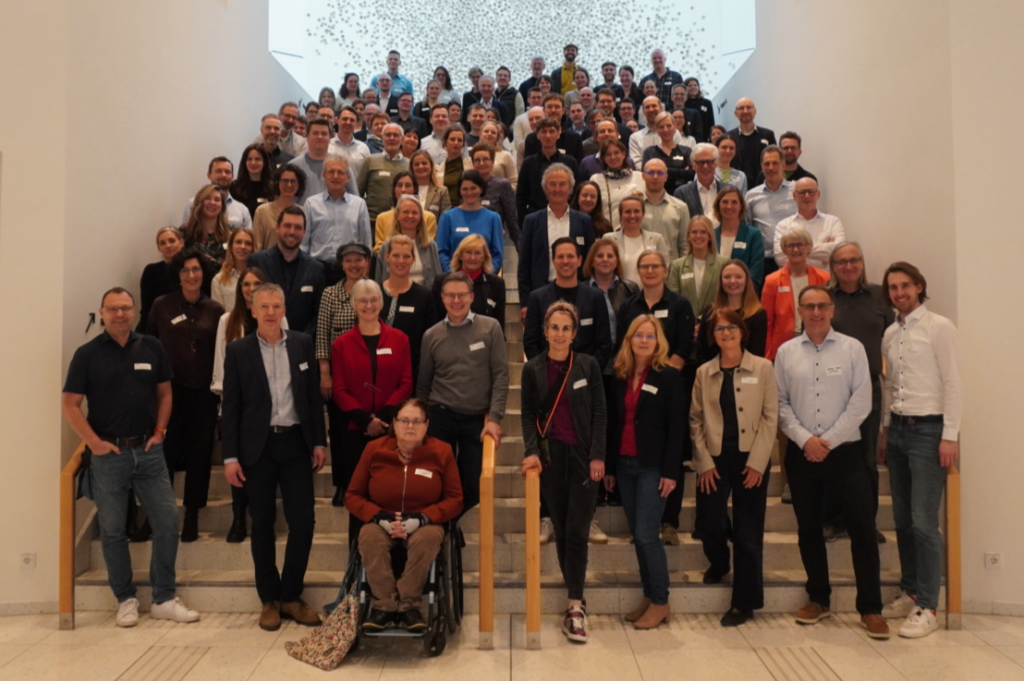
In the second year of the project (2026), the focus is placed on a participatory process aimed at further developing the Recommendations for Physical Activity Promotion. This process is bringing together approximately 120 stakeholders from the fields of policy, practice, and academia in sector-specific working groups. The goal is to review the evidence-based drafts of the Recommendations for Physical Activity Promotion, adapt them to the German context, and further develop them in a way that is relevant to practice.
Participatory process
A key feature of the NEBB-update is the parcitipatory process, which involves numerous experts in physical activity promotion in the updating and further developing the recommendations, with the aim of facilitating the translation of evidence-based recommendations into practice.
The project is supported by various committees. These committees provide the project team with methodological and strategical guidance to ensure that the recommendations are of high scientific quality while remaining practical.
- Dr. Volker Anneken, Forschungsinstitut für Inklusion durch Bewegung und Sport
- Prof. Dr. Jürgen M. Bauer, Geriatrisches Zentrum am Universitätsklinikum Heidelberg
- Prof. Dr. Ralf Brand, Universität Potsdam
- Prof. Dr. Jens Bucksch, Pädagogische Hochschule Heidelberg
- Prof. Dr. Eva Heinen, Eigenössische Technische Hochschule Zürich
- PD Dr. Carmen Jochem, Universität Bayreuth
- Prof. Dr. Christine Joisten, Deutsche Sporthochschule Köln und Deutsche Gesellschaft für Sportmedizin und Prävention e.V.
- Prof. Dr. Heike Köckler, Hochschule für Technik, Wirtschaft, Gesundheit Bochum
- Prof. Dr. Michael Leitzmann, Universität Regensburg
- Dr. Kristin Manz, Robert-Koch-Institut
- Prof. Dr. Sven Schneider, Universität Heidelberg
- Prof. Dr. Rolf Schwarz, Pädagogische Hochschule Karlsruhe
- Dr. Vera Tillmann, Forschungsinstitut für Inklusion durch Bewegung und Sport
- Prof. Dr. Manfred Wegner, Christian-Albrechts-Universität zu Kiel
- Prof. Dr. Adrian Bauman, University of Sydney
- Prof. Dr. Paquito Bernard, Université du Québec à Montréal
- Prof. Dr. Panteleimon Ekkekakis, Michigan State University
- Prof. Dr. Sonja Kahlmeier, City Health
- Prof. Dr. Shawnda Morrison, University of Ljubljana
- Prof. Dr. Elaine Murtagh, University of Limerick
- Dr. Joe Piggin, Loughborough University
- Prof. Dr. Brett Smith, Durham University
- Dr. Stephen Whiting, WHO Regional Office for Europe
- Dr. Kremlin Wickramasinghe, WHO Regional Office for Europe
- Dr. Felizitas Alaze-Hagemann / Dr. Katharina Reiss, Netzwerk Gesund ins Leben, Bundeszentrum für Ernährung (BZfE) in der Bundesanstalt für Landwirtschaft und Ernährung (BLE)
- Angelika Baldus, Deutscher Verband für Gesundheitssport und Sporttherapie e.V. (DVGS)
- Dr. Claudia Brendler, Bundesanstalt für Arbeitsschutz und Arbeitsmedizin (BAuA)
- Dr. Malte Bödecker, Bundesinstitut für Öffentliche Gesundheit (BIÖG)
- Marc Elxnat, Deutscher Städte- und Gemeindebund e.V. (DStGB)
- Benedikt Ewald, Deutscher Behinderten Sportverband e.V. (DBS)
- Constanze Gawehn, Deutscher Olympischer Sportbund e.V. (DOSB)
- Inke Ruhe, Bundesvereinigung für Prävention und Gesundheitsförderung e.V. (BVPG)
- Jens Hupfeld, GKV-Spitzenverband
- Dr. Thomas Kauth, Bundesverband der Kinder und Jugendärzt*innen e.V. (BVKJ)
- Angela Kohls, Allgemeiner Deutscher Fahrrad-Club e.V. (ADFC)
- Prof. Dr. Robert Richter, Deutsche Allianz Klimawandel und Gesundheit e.V. (KLUG)
- Prof. Dr. Peter Gelius, Universität Lausanne
- Prof. Dr. Katja Siefken, Medical School Hamburg
- Prof. Dr. Gorden Sudeck, Eberhard Karls Universität Tübingen
- Prof. Dr. Susanne Tittlbach, Universität Bayreuth
- Prof. Dr. Claudia Voelcker-Rehage, Universität Münster
- Prof. Dr. Alexander Woll, Karlsruher Institut für Technologie
Publications
Abu-Omar, K., Geidl, W., Mino, E., Tcymbal, A., Resch, J., Messing, S., & Pfeifer, K. (2026). S10-2: Updating the German Recommendations for Physical Activity Promotion – Integration of Sector-Relatedness, Health Equity, and Planetary Health. Baltic Journal of Sport and Health Sciences, 5(Supplement), 264. https://doi.org/10.33607/bjshs.v5iSupplement.2030
Geidl, W., Abu-Omar, K., Mino, E., Tcymbal, A., Resch, J., Messing, S., & Pfeifer, K. (2026). S10-3: Updating the German Recommendations for Physical Activity. Moving Beyong Quantitative Recommendations? Baltic Journal of Sport and Health Sciences, 5(Supplement), 265. https://doi.org/10.33607/bjshs.v5iSupplement.2031
Pfeifer, K., Geidl, W., Abu-Omar, K., Mino, E., Tcymbal, A., Resch, J., … Tittlbach, S. (2025, September 8). Protocol for the Evidence Update of the German Recommendations for Physical Activity and Physical Activity Promotion (NEBB-Update). https://doi.org/10.17605/OSF.IO/7TH2Z
Contact
For further information please contact the team
Email: project-nebb@fau.de
Project duration: 02/2025 – 01/2027
Funding: German Federal Ministry of Health
 1/1
1/1Project team (from left to right): Dr. Sven Messing, Dr. Eriselda Mino, PD Dr. Wolfgang Geidl, PD Dr. Karim Abu-Omar, Prof. Dr. Klaus Pfeifer, Dr. Antonina Tcymbal, Julian Resch (Missing: Dr. Simone Kohler)